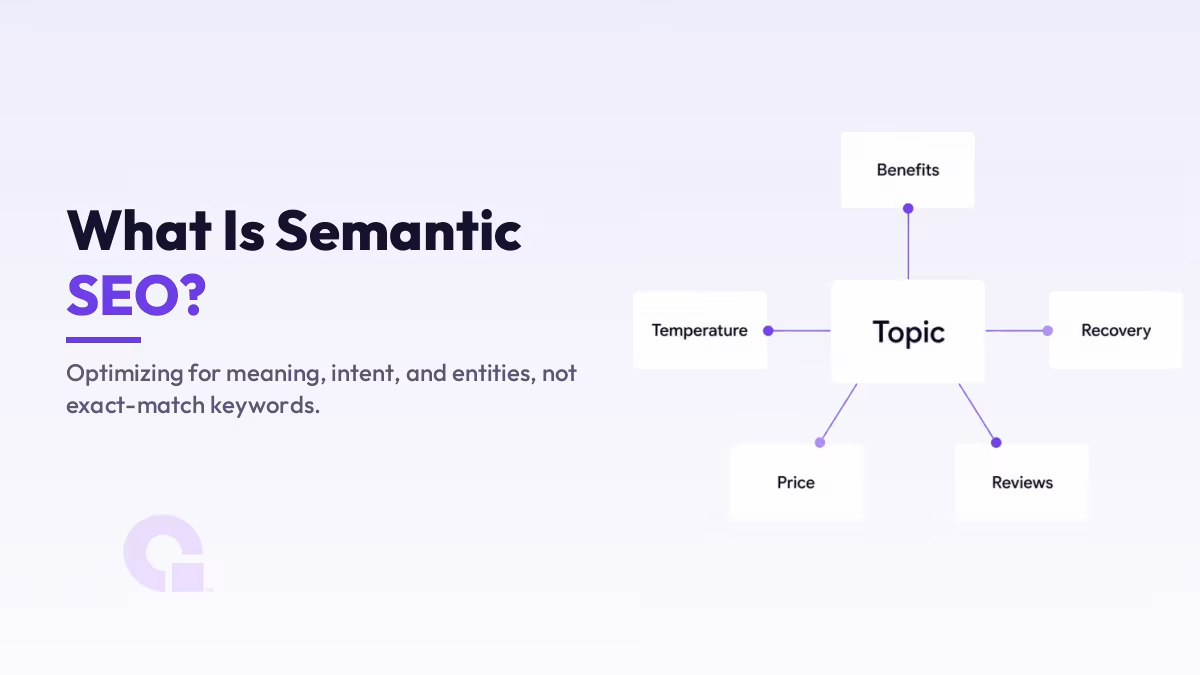
Semantic SEO is the practice of optimizing for the meaning and intent behind a search, not just the exact keyword typed into the box. It works because Google no longer matches strings of text; it understands topics, entities, and how ideas relate, so the page that covers a subject properly tends to win.
In this guide I will explain what semantic SEO actually is, why it matters more every year, and how to do it in 2026 without falling for the old tricks like LSI keywords and density targets.
Key Takeaways
- Semantic SEO optimizes for meaning, intent, and entities rather than exact-match keywords.
- Google understands topics through systems like Hummingbird, RankBrain, BERT, and MUM, so keyword matching alone is outdated.
- The real work is covering a topic fully: the subtopics, related entities, and questions people actually ask.
- Structured data (schema) helps by spelling out the entities on your page for machines.
- Skip the myths: there is no LSI keyword list to hit, and keyword density is not a target.
What semantic SEO actually means
Semantic SEO is optimizing for the meaning behind a query instead of the literal words. Old-school SEO tried to match keywords exactly, so if someone searched “best running shoes” you repeated that phrase everywhere. Semantic SEO instead asks what the person really wants and covers the whole subject around it.
This shift is not theory; it is how Google already works. Updates like Hummingbird, RankBrain, and BERT taught it to read language in context, understand entities (real things like people, places, and products), and connect related concepts. So the winning page is usually the one that answers the intent thoroughly, not the one that repeats a phrase the most.
Why semantic SEO matters more every year
The stakes have risen because search results now reward understanding, not repetition. AI Overviews, featured snippets, and People Also Ask all pull from pages that cover a topic in depth, and they cite the sources that answer the question cleanly. A page built around one exact phrase rarely does that well.
There is also a defensive reason. As AI answers absorb the simple, one-line queries, the durable traffic goes to pages with genuine depth and expertise that these systems want to quote. Semantic SEO is how you become that page.
The building blocks: entities, topics, and search intent
Three simple ideas sit under all of this. An entity is a distinct thing Google recognizes, like a brand, a product, or a place, and connects to other things it relates to. A topic is the full subject you are covering, wider than any single keyword. Search intent is what the person actually wants: to learn, to compare, or to buy.
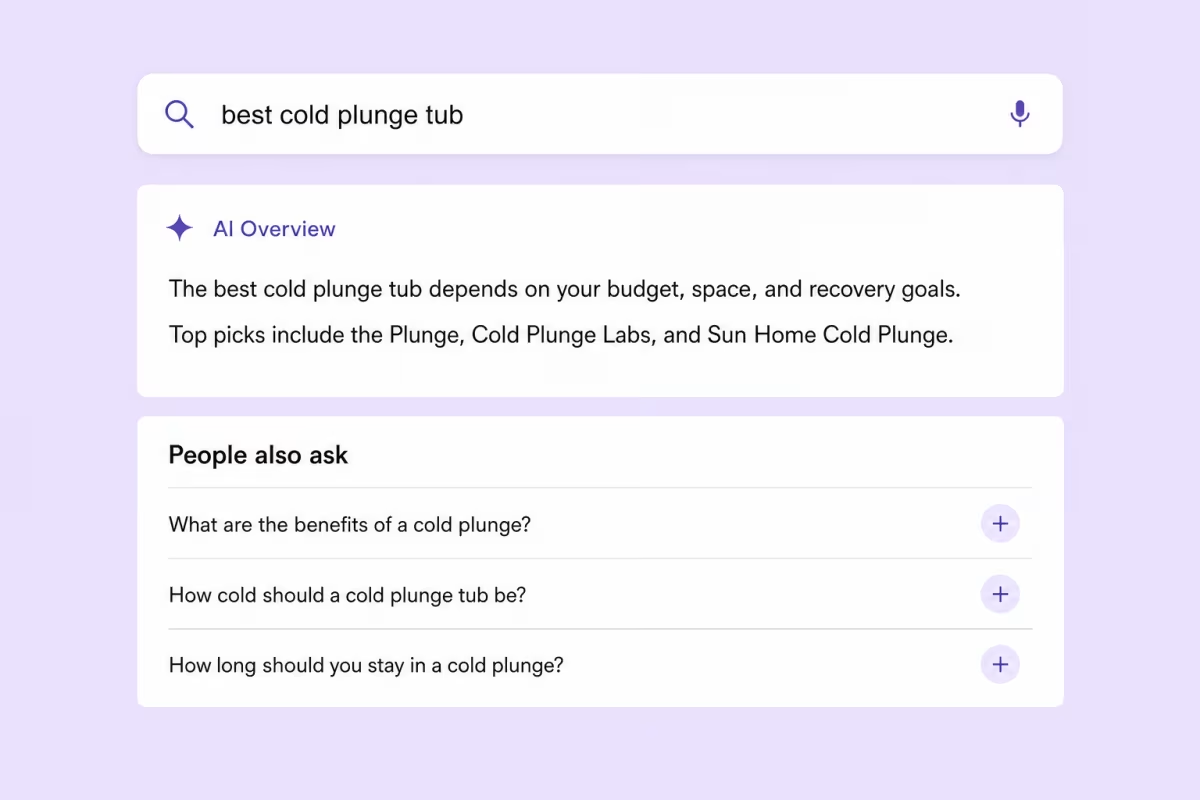
Get those right and the search page starts to make sense. When you search a topic, Google surrounds the results with related questions and an AI summary, which is a direct readout of the entities and intents it associates with your subject.
How to do semantic SEO, step by step
None of this is complicated once you stop thinking in keywords. The practical work looks like this:
- Start from intent, not the keyword, because a title matched to what the reader wants beats one stuffed with the exact phrase.
- Cover the whole topic, working in the subtopics, related entities, and the questions that show up in People Also Ask, so the page is genuinely complete.
- Write with natural related terms, since Google reads context, and forcing a phrase count only makes the copy worse.
- Structure it clearly with descriptive headings and internal links, which is how you signal the relationships between your pages.
- Make the entities explicit with schema, and the easiest way to add that structured data in WordPress is an SEO plugin like Rank Math.
If you want to see this applied to real pages, I walk through concrete cases in semantic SEO examples in action, and the topic-coverage side has its own method in my topical map guide.
| Old keyword SEO | Semantic SEO |
|---|---|
| Match the exact phrase repeatedly | Answer the intent behind the phrase |
| One keyword per page | One topic, ranking for many related queries |
| Hit a keyword density percentage | Cover subtopics and entities naturally |
| Meta tags and exact terms as the goal | Depth, clarity, and structured data as the goal |
Semantic SEO mistakes worth avoiding
A lot of “semantic SEO” advice is really recycled keyword tactics in a new coat. The biggest trap is chasing LSI keywords, because there is no secret list of LSI terms Google scores you on; the useful version is simply covering the real related subtopics a thorough writer would include anyway. Right next to it is the keyword density target, which Google moved past over a decade ago, and forcing a percentage now reads worse and can trip quality filters.
Two structural myths round it out. You do not have to force a formal pillar-and-cluster layout because someone called it mandatory; it is one useful way to organize, but clean internal linking and full coverage matter more than the template. And the old “one keyword per page” rule is outdated, since a single strong page routinely ranks for dozens of related queries, so splitting every variation into its own thin page usually backfires.
To be fair, the classics still have a place. You should put your main term in the title, the H1, and the opening lines, and keyword research is still how you learn what people search. Semantic SEO does not throw that out; it just stops it from being the whole strategy.
So, is semantic SEO worth the effort, or just a buzzword?
In my view, semantic SEO is worth it, mostly because it is not really a trick at all. Strip away the jargon and it just means writing genuinely useful, complete content for a real person and making the structure clear enough for a machine to follow. That has quietly been the winning approach for years.
Where it goes wrong is when people treat it as another checklist of gimmicks, hunting LSI terms and density scores. Skip all that, cover the topic properly, add clean schema, and you are already doing semantic SEO better than most sites that talk about it.
Want help making your content genuinely rank?
If your pages are thorough but still not ranking, contact us or email me and I will look at where the topic coverage or structure is letting you down. Getting the meaning right is what makes everything else work.
Update Logs
03 Jul 2026
- Rewrote for 2026 around meaning, entities, and intent, with a clear step-by-step method, an honest myth-busting section on LSI keywords and keyword density, and links to the examples and topical-map guides.
Want our posts to show up more often on Google?
One step & Google will surface this site in your Top Stories.