The theory of semantic SEO is easy to nod along to; seeing it work on a real page is what makes it click. These semantic SEO examples show the strategy in action, where covering meaning, entities, and intent beats repeating a keyword.
I have grouped them as five patterns you can copy, each with the principle it demonstrates and the payoff it earns. If you want the underlying concepts first, my semantic SEO guide lays them out.
Key Takeaways
- A single well-built page can rank for dozens of related queries, not just its target keyword.
- Matching intent beats matching exact words: “sugar-free cake” and “cake without sugar” are the same request.
- Answering a whole question cluster wins featured snippets and People Also Ask spots.
- Being recognized as an entity gets you into Knowledge Panels and AI answers.
- Structured data turns your entities into rich results like star ratings and FAQs.
Example 1: one page ranking for dozens of related queries
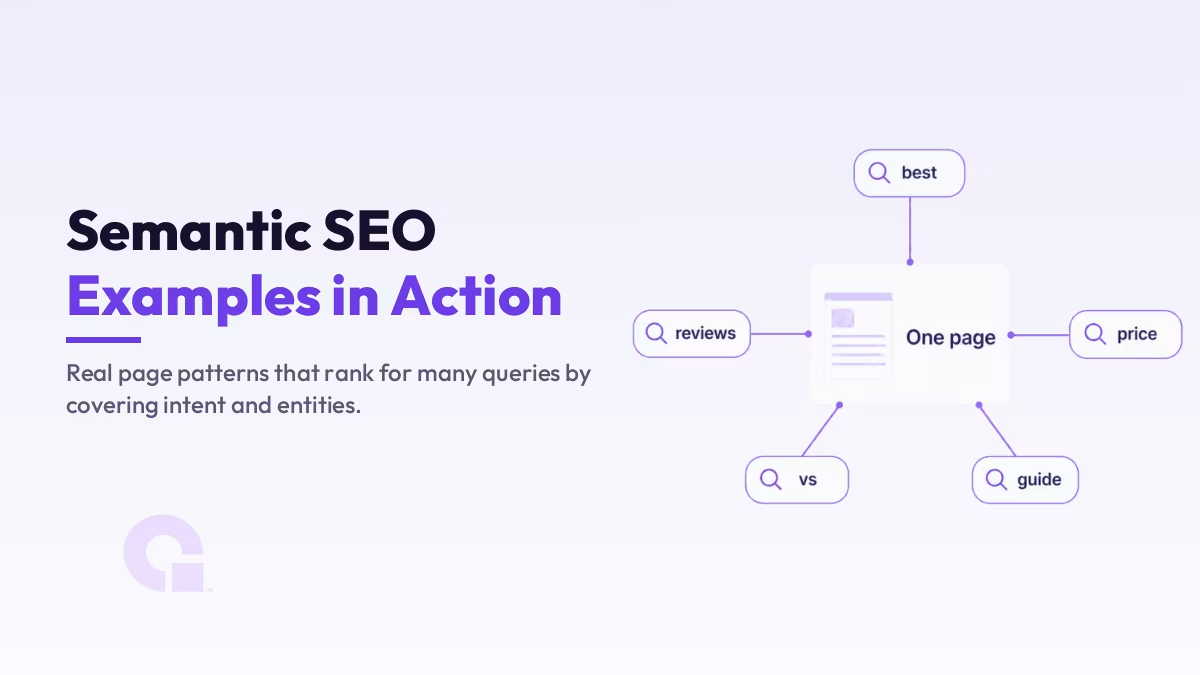
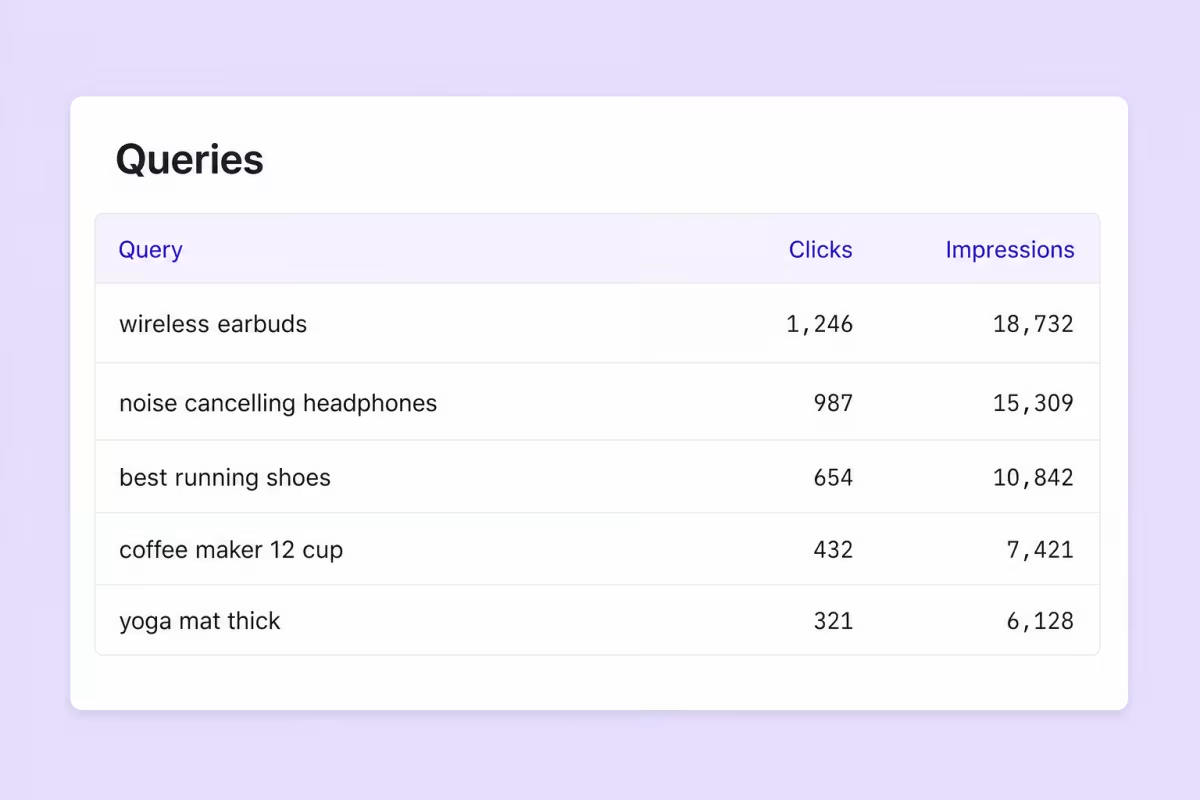
The clearest sign of semantic SEO working is a single page that ranks for far more than the keyword you built it around. When a page covers the whole topic, Google matches it to every related phrasing people search, so one “best cold plunge tubs” page also pulls traffic for price, size, benefits, and comparison queries.
You can watch this happen in Search Console, where the Queries report for one URL fills up with variations you never explicitly targeted. That spread is the whole point: cover the intent fully and the page earns the long tail for free.
Example 2: matching intent, not exact words
Someone searching “cake without sugar” and someone searching “sugar-free cake recipes” want the same thing, and Google now knows it. Thanks to language models like BERT, the same page can rank for both because the meaning matches, even though the words do not.
The practical lesson is to write for the request behind the query. A recipe page that naturally uses “no sugar”, “sugar-free”, and “without sugar” as a real writer would, rather than repeating one exact phrase, covers the intent and ranks across all of it.
Example 3: owning a whole question cluster
Search results are full of featured snippets and People Also Ask boxes, and both reward pages that answer the surrounding questions cleanly. If your page directly answers “how long should I cold plunge” and “how cold should the water be” in clear sections, it becomes the source Google quotes.
This is semantic SEO in its most visible form: you are not ranking a keyword, you are answering an intent so directly that Google lifts your text into the answer box. Structured, question-led headings are what make that possible.
Example 4: being recognized as an entity
Search “Leonardo da Vinci” and Google knows you mean the artist and inventor, not a stray string of words, because he is an entity in its Knowledge Graph. The same applies to a brand: once Google recognizes your business as a distinct entity, it connects you to your products, reviews, and topics, which is how you show up in Knowledge Panels and AI answers.
You build that recognition with consistent naming, an About page, an Organization schema, and mentions across the web. If the term “entity” is new, the SEO glossary defines it plainly.
Example 5: structured data turning entities into rich results
Structured data is where semantic SEO becomes something you can literally see in the SERP. Add product and review schema to a product page and Google can show a star rating; add FAQ schema and your answers can surface directly under the result.
The schema does not change your content; it labels the entities on the page so machines read them without guessing. The easiest way to add product, review, and FAQ schema in WordPress is an SEO plugin like Rank Math.
| Example | Semantic principle | Payoff |
|---|---|---|
| One page, many queries | Full topic and intent coverage | Long-tail traffic you never targeted |
| Intent over exact words | Meaning matching (BERT) | Rank for every phrasing of a request |
| Owning a question cluster | Direct answers to related questions | Featured snippets and People Also Ask |
| Entity recognition | Knowledge Graph and brand entity | Knowledge Panels and AI citations |
| Structured data | Labeled entities via schema | Star ratings and rich results |
How to turn a thin keyword page into a semantic one
If you have a page stuck on one keyword, the fix follows the same pattern every time. You audit what the searcher actually wants, widen the page to cover it, label the entities, and connect it to your related content.
Upgrading a keyword page to a semantic one
- Audit the real intent and the questions people ask around it
- Add the missing subtopics and related entities
- Mark up the entities with schema for rich results
- Interlink it with your related pages to build the topic
Step four is where a lot of sites stop short. Grouping related pages and linking them, the way I lay out in the topical map guide, is what tells Google you cover the subject in depth, not just one slice of it.
So, what do these semantic SEO examples teach you?
Honestly, the through-line is the same in every example: cover the whole intent and make your entities explicit, and the rankings, snippets, and rich results follow. None of it is a trick, which is exactly why it keeps working while keyword hacks keep dying.
So copy the pattern, not the specific pages. Take your most important page, ask what the searcher truly wants, and build until it answers that fully, then let the schema and internal links do the rest.
Want these patterns applied to your pages?
If you want a page rebuilt to cover its full topic and win those snippets, contact us or email me and I will map out where the intent and entity gaps are. The examples are simple; doing them consistently is the hard part.
Update Logs
03 Jul 2026
- Rewrote for 2026 into five concrete, copyable examples with the principle and payoff for each, added a summary table and a page-upgrade flow, and cross-linked the semantic SEO and topical-map guides.
Want our posts to show up more often on Google?
One step & Google will surface this site in your Top Stories.